
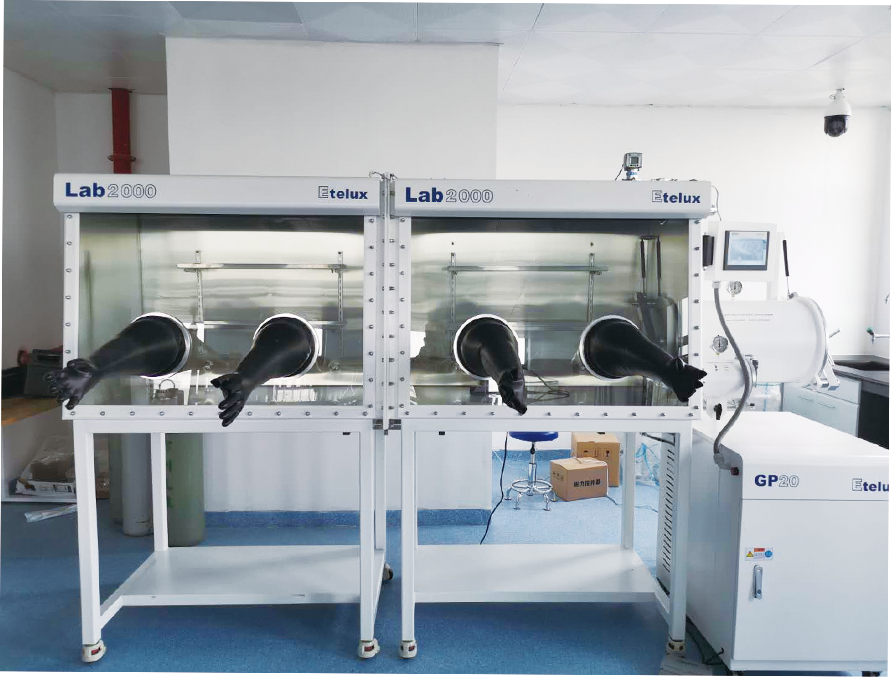
Introduction
When sourcing vacuum glove boxes to pair with magnetron sputtering PVD systems, process engineers and procurement specialists almost always prioritize water/oxygen purity metrics: 0.1ppm ultra-high-purity and 1ppm standard inert environments dominate equipment comparison checklists. The industry widely accepts low impurity levels as the primary benchmark to judge whether a glove box fits precision thin film manufacturing.
However, field data from optical coating fabs, semiconductor thin-film labs, and functional coating mass production lines reveals a widespread hidden bottleneck: persistent micro-vibration from standard non-damped glove boxes creates irreversible thin-film defects, even when inert gas purity fully meets technical specifications.
Magnetron sputtering differs fundamentally from ALD and conventional CVD deposition. As a high-energy physical vapor deposition technique, its nanometer-level film growth process relies on absolute substrate stability. Resonance, floor vibration transfer, and internal pump/pneumatic pulsations from ordinary glove boxes disrupt atomic stacking order, triggering yield fluctuations ranging from 10% to 30% between identical-purity glove box units.
This industry guide breaks down the vibration sensitivity of magnetron sputtering workflows, enumerates four production-critical thin-film defects caused by unmanaged micro-shake, exposes common procurement blind spots, and delivers actionable anti-vibration glove box selection standards tailored to lab R&D, pilot lines, and full-scale industrial sputtering manufacturing. All guidance is built on real production feedback to help buyers avoid unnecessary scrap, unstable batch quality, and wasted investment in over-specified yet vibration-unstable glove box hardware.
1. Unique Process Traits That Make Magnetron Sputtering Ultra-Sensitive to Vibration
Magnetron sputtering generates uniform functional coatings by ionizing inert gas to bombard solid targets, ejecting metal or dielectric atoms that settle onto substrate surfaces. Most high-end optical and semiconductor coatings fall within tens to hundreds of nanometers thickness, leaving zero tolerance for substrate displacement during deposition. Two core process characteristics amplify vibration risk far beyond other thin-film technologies:
1. High-kinetics sputtered particles with fixed directional trajectories
Minor substrate jitter alters atomic incident angles, creating uneven deposition coverage across wafer or panel surfaces. Unlike slow, low-energy ALD deposition, sputtering’s fast particle movement cannot compensate for positional drift mid-cycle.
2. Ordered atomic lattice formation for dense, reliable thin films
Premium coating performance (transmittance, corrosion resistance, adhesion strength) depends on tightly packed, defect-free microstructures. Continuous micro-vibration breaks regular atomic accumulation, forming voids and pinholes invisible to visual inspection yet catastrophic for component reliability testing.
As the dedicated transfer station for substrates, coating fixtures, and semi-finished parts, vacuum glove boxes act as the vibration source bridge between factory utility equipment (air compressors, vacuum pumps) and the sputtering chamber. Without professional vibration isolation, micro-shock propagates directly into the deposition workflow, forming a permanent barrier to consistent mass production yield.
2. Four Irreparable Thin-Film Defects Triggered by Excessive Glove Box Vibration
Many manufacturing teams underestimate micro-vibration hazards, assuming subtle cabinet shaking produces no measurable impact on finished parts. For nanoscale PVD sputtering, even micron-level movement generates quantifiable quality failures that only surface during post-production environmental testing:
2.1 Uneven Film Thickness & Poor Batch-to-Batch Consistency
Thickness uniformity is the top pass/fail standard for optical filters, semiconductor passivation layers, and precision decorative coatings. Glove box resonance and transmitted floor vibration shift the relative distance between substrate and sputtering targets during long deposition runs. The result is localized over-deposition or insufficient film coverage, pushing thickness deviation outside allowable industrial tolerances and ruining batch repeatability.
2.2 Low Film Density & Microscopic Pinhole Defects
Stable, static atomic stacking is mandatory for dense barrier coatings. Vibration disrupts steady particle settlement, leaving internal voids and micro-pinholes inside the thin film matrix. These hidden flaws lead to long-term performance degradation: oxidation discoloration, reduced light transmittance, weakened corrosion protection, and shortened service life for coated optical and electronic components.
2.3 Degraded Film-Substrate Adhesion & Edge Peeling Risks
The initial atomic bonding phase between sputtered film and base substrate is structurally fragile. Repeated micro-vibration weakens molecular adhesion at the interface, creating latent bonding defects that do not surface immediately after manufacturing. During thermal cycling, humidity, or abrasion reliability tests, affected parts suffer film peeling and edge flaking, drastically raising rework and scrap rates.
2.4 Cumulative Fixture Position Drift & Lost Process Repeatability
High-precision magnetron sputtering production relies on automated fixture alignment and fixed positioning offsets. Standard glove boxes without damping structures produce continuous low-frequency vibration that accumulates positional deviation over weeks of operation. Alignment accuracy gradually declines, destroying experimental reproducibility and creating inconsistent process data across separate production runs.
3. The Biggest Glove Box Procurement Pitfall: Prioritizing Purity While Ignoring Vibration Isolation
The most costly industry-wide mistake in PVD glove box sourcing is one-sided pursuit of ultra-low ppm water/oxygen performance while completely disregarding vibration suppression capacity — a non-negotiable specification exclusive to magnetron sputtering applications.
It is critical to draw a clear dividing line between the functions of inert purity and anti-vibration design:
– Ultra-clean inert atmospheres only eliminate oxidation and moisture contamination risks, forming the minimum acceptable process threshold;
– Professional vibration isolation systems control micro-shake and resonance, establishing the upper limit of stable thin-film yield and batch consistency.
Real fab operating data verifies this gap: two glove box units with identical 0.1ppm static purity ratings can deliver a 10%–30% yield difference solely based on whether they integrate full industrial anti-vibration hardware. This explains why many production lines investing in top-tier high-purity glove boxes still struggle with unstable coating quality and frequent batch rejection.
4. Industrial-Grade Vibration-Isolated Glove Box Selection Standards for Sputtering
Below are four field-proven, tiered selection criteria engineered for magnetron sputtering, usable directly by process engineers and procurement teams during equipment tendering and technical evaluation:
4.1 Suspended Damping Base & Anti-Vibration Foot Pads
Replace rigid fixed support legs with full industrial suspended isolation bases and high-density damping pads. This dual-layer design absorbs micro-vibration generated internally by gas circulation pumps while blocking external resonance transmitted by factory air compressors, sputtering power supplies, and rough floor surfaces, cutting vibration interference at the root source.
4.2 Reinforced Thickened Chamber Structure with Internal Stiffening Ribs
Sputtering-dedicated glove boxes adopt thicker stainless steel chamber panels and integrated internal reinforcing ribs to boost overall cabinet rigidity. This structural upgrade eliminates micro-deformation and resonant shaking triggered by negative pressure fluctuations, frequent antechamber door opening, and long-duration continuous gas circulation, sustaining static stability for 24/7 mass production.
4.3 Optimized Low-Vibration Gas Circulation & Pump Layout
Pneumatic pulsation and reciprocating pump operation are commonly overlooked vibration sources. Qualified vibration-isolated glove boxes integrate buffered gas pipelines, flexible soft connection joints, and offset low-vibration pump installation layouts to suppress cyclic dynamic micro-shake during high-frequency substrate transfer cycles.
4.4 Scaled Configuration Matching: R&D vs Pilot vs Mass Production
– Laboratory prototype R&D: Basic single-layer damping foot pads satisfy intermittent low-volume sample testing;
– High-end optical coating, semiconductor wafer deposition, continuous mass manufacturing: Mandatory full suspended anti-vibration base + fully reinforced rigid chamber complete system to eliminate all process fluctuation risks.
5. Conclusion: Balance Inert Purity and Vibration Stability for Maximum Sputtering Yield
Modern magnetron sputtering glove box evaluation can no longer rely solely on static water and oxygen ppm data. For nanoscale precision PVD thin film deposition workflows, inert atmosphere purity sets the minimum process floor, while robust vibration isolation defines the maximum achievable production yield and long-term batch consistency.
Even the highest-spec 0.1ppm glove box cannot offset microstructural film defects induced by uncontrolled vibration. All equipment procurement, line expansion, and glove box upgrade projects must add vibration isolation performance as a core scoring metric during technical comparison. Only pairing ultra-pure inert environments with full anti-resonance cabinet design achieves dual guarantees: contamination-free deposition conditions and vibration-stable substrate positioning for reliable, high-yield sputtering manufacturing.