
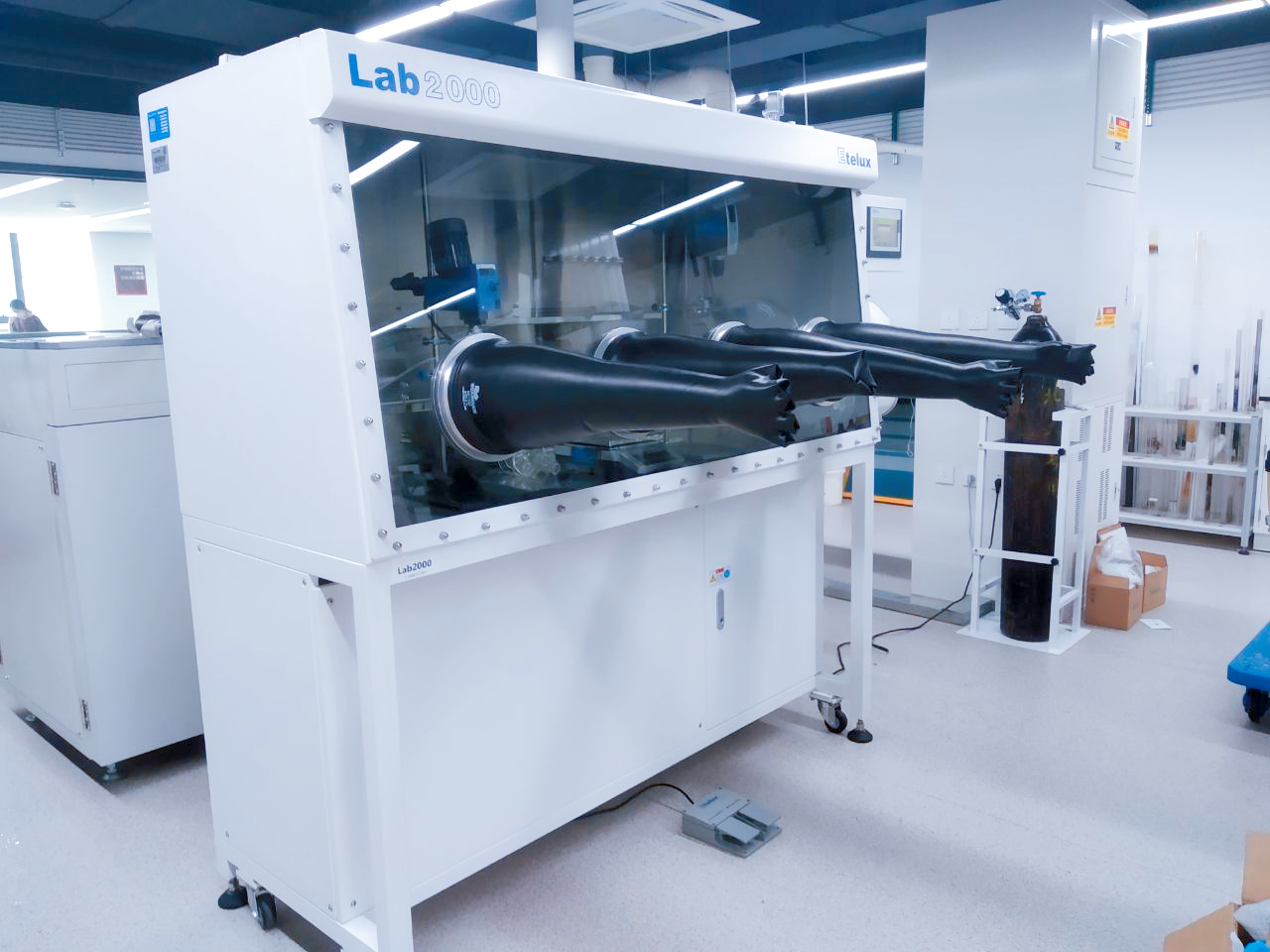
When selecting industrial glove boxes for vacuum coating lines, engineering and procurement teams typically focus only on core chamber performance: 1ppm and 0.1ppm low moisture and oxygen purity levels, long-term sealing stability, and closed-loop purification efficiency. These technical specifications are essential for guaranteeing high-quality thin-film results in precision PVD, CVD, ALD, and optical coating processes.
However, one critical factor is consistently overlooked in standard equipment procurement: antechamber size and pump-down rate are the true limiting factors for continuous vacuum coating production efficiency. Even high-precision glove box systems fail to deliver full production potential if the transfer chamber cannot support fast, high-frequency, and batch-scale material exchange.
Main chamber purity determines thin-film yield quality, while antechamber performance directly controls production tact, daily material turnover speed, and overall manufacturing throughput. Many production lines suffer from low effective capacity, frequent line stagnation, and unnecessary labor downtime simply due to poorly matched antechamber configurations.
This article explains why antechamber dimensions and vacuum pump-down speed are vital industrial glove box selection criteria. It provides practical, production-oriented guidelines to help process engineers and procurement specialists optimize equipment configuration for stable yield and maximum continuous production efficiency.
1. Why Antechamber Performance Defines Vacuum Coating Throughput
Vacuum thin-film coating is a strictly closed inert manufacturing process. All substrates, coating jigs, target materials, and production consumables must be transferred through the glove box antechamber using a fixed vacuum purge cycle. Main chamber air exposure is prohibited to maintain ultra-low O₂ and H₂O environments required for defect-free thin-film deposition.
Unlike laboratory batch testing, industrial vacuum coating requires non-stop, high-frequency material cycling. Every slow pump-down or prolonged gas balancing cycle creates cumulative tact loss that significantly reduces daily output. While main chamber parameters ensure coating quality, antechamber performance directly determines how fast the entire production line can run.
This is why identical 0.1ppm high-end glove boxes can show 20% to 40% production throughput differences across different manufacturing sites — the gap comes entirely from antechamber efficiency mismatch.
2. Antechamber Size: Batch Capacity Beats Small-Chamber Speed Myths
A common procurement misunderstanding assumes smaller antechambers offer faster operation and lower gas consumption. This principle only works for laboratory R&D and cannot be applied to continuous vacuum coating mass production.
Industrial thin-film manufacturing requires full-batch substrate transfer, complete fixture loading, and bulk material replenishment. Small-sized antechambers force operators to split batches into multiple transfers, creating repeated pump-purge cycles, longer waiting times, and constant production interruptions.
2.1 Laboratory vs Industrial Antechamber Application Differences
Small lab antechambers (150–270mm): Suitable for prototype testing, small-sample R&D, and sporadic material replacement. These chambers cannot sustain high-volume continuous production due to limited single-batch capacity and excessive cycling frequency.
Industrial large-volume antechambers (400×400×400mm / φ360×600mm): Designed specifically for vacuum coating mass production. They accommodate full substrate panels, complete coating jigs, and multiple target components in a single transfer cycle, drastically reducing exchange frequency and minimizing tact loss.
2.2 Core Sizing Rule: Match Production Jig Dimensions
The most reliable antechamber selection standard is full compatibility with maximum production fixture sizes. If the chamber opening cannot fit full jigs, batch splitting becomes mandatory, turning one efficient transfer into three or four repeated vacuum cycles. This exponentially increases production cycle time and lowers line throughput.
3. Pump-Down Rate: The Most Underrated Throughput Bottleneck
The antechamber’s primary industrial function is complete atmospheric displacement before materials enter the ultra-pure glove box main chamber. The pump-down rate directly determines each material transfer cycle’s minimum duration and defines the upper limit of line tact speed.
Many entry-level glove boxes use low-power pumping systems and unoptimized internal gas pipelines, resulting in slow vacuum stabilization. Although static vacuum parameters look compliant on datasheets, real-world industrial cycles often take 5–8 minutes or longer. In high-frequency mass production, this creates enormous cumulative downtime.
3.1 Production Risks of Slow Pump-Down Performance
Lower daily production capacity: Extended single-cycle times multiply across hundreds of daily transfers, reducing effective working hours and overall line output.
Unstable inert atmosphere & yield degradation: Incomplete vacuum displacement leaves residual oxygen and moisture inside the antechamber. When the inner gate opens, ambient impurities enter the main chamber, causing thin-film unevenness, pinhole defects, adhesion issues, and inconsistent batch quality.
3.2 Industrial-Grade Pump Configuration for Continuous Coating
For stable high-speed vacuum coating production, antechambers must adopt independent high-flow vacuum pump systems and dedicated gas control loops. Sustaining a stable vacuum level above -0.09MPa ensures fast evacuation, rapid pressure balancing, and consistent high-frequency material turnover — essential for industrial PVD, CVD, and optical thin-film mass production.
4. Engineer & Procurer Field-Verified Glove Box Selection Criteria
To balance high thin-film yield and maximum production efficiency, industrial vacuum coating glove box selection must follow four practical rules:
1. Prioritize fixture compatibility: Choose antechamber sizes larger than your maximum production jigs to enable full-batch one-time transfer.
2. Deploy industrial large-volume chambers for mass production: Replace lab-scale small ports with 400-level industrial antechambers to reduce cycling frequency.
3. Validate real pump-down speed, not datasheet values: Insist on independent high-flow pumping systems for stable, fast, and repeatable vacuum exchange cycles.
4. Balance purity performance and tact efficiency: Optimize main chamber purity for yield and antechamber cycling speed for throughput to achieve full production-grade performance.
5. Conclusion: Optimize Both Purity and Cycling Efficiency
Modern industrial glove box selection for vacuum coating should no longer focus solely on static 0.1ppm or 1ppm purity metrics. True production-ready glove box systems combine ultra-high-purity inert atmosphere control with industrial-grade fast-cycle material transfer capabilities.
Antechamber size and pump-down rate are not auxiliary features — they are core throughput-determining parameters. Overlooking these factors leads to high-spec equipment underutilization, restricted production scalability, and hidden operational cost waste.
For future glove box procurement and upgrade projects, process-matched antechamber configuration is essential to maximize thin-film yield, stabilize batch consistency, and unlock full vacuum coating production capacity.
Custom Industrial Glove Box Solutions
We provide fully customized industrial glove box solutions optimized for continuous vacuum coating workflows. We tailor antechamber dimensions, pump flow rates, and gas control logic according to your jig sizes, transfer frequency, and throughput goals.
Contact our engineering team for professional process analysis, customized glove box configuration, and accurate project quotation.
#GloveBox #VacuumCoating #ThinFilmDeposition #PVD #CVD #ALD #IndustrialManufacturing #ProcessEfficiency #EquipmentProcurement #InertAtmosphere