
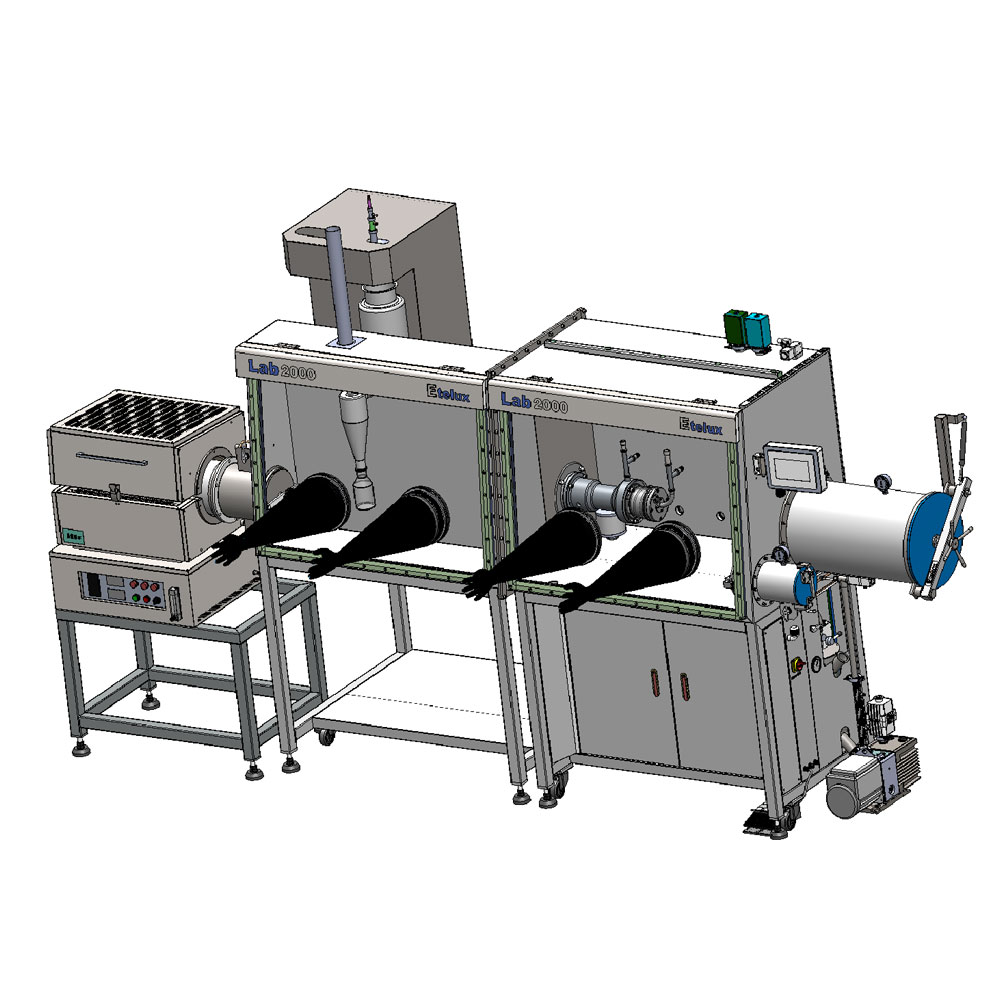
In lithium battery R&D labs, inert atmosphere glove boxes act as the critical infrastructure for coin cell assembly, electrolyte preparation, and handling air-sensitive electrode materials. It has become a widespread industry habit for researchers and procurement teams to evaluate glove box capability purely based on steady, low water and oxygen PPM values.
Nevertheless, countless unexplained experimental deviations, inconsistent cycling results and premature cell failure stem from hidden, chronic system flaws. These subtle issues rarely trigger immediate equipment alarms, making them far harder to diagnose than obvious hardware faults.
This article outlines the most frequently overlooked risks on battery-grade glove boxes. It helps process engineers and procurement professionals avoid unnecessary experimental losses and unwise capital equipment investments.
1. Static PPM Ratings Cannot Reflect Real-World Dynamic Stability
This remains the biggest misconception within academic and industrial battery research communities.
Manufacturers usually quote ultra-low H₂O/O₂ PPM figures acquired under idle, fully sealed conditions with no manual operation. Once regular lab workflows begin — frequent antechamber sample transfer, continuous material weighing and repeated glove operation — the internal gas balance will inevitably be disturbed.
Entry-level glove box models often adopt undersized gas circulation and purification assemblies. After each sample exchange, water and oxygen concentrations surge and require extended periods to return to target thresholds. Many lab technicians perform cell assembly during this unstable phase without awareness. For lithium-metal anode and high-nickel cathode research, short-term exposure to trace contaminants disrupts SEI growth and permanently ruins experiment repeatability.
Core evaluation principle: Do not only focus on static minimum PPM. Always test atmosphere recovery speed under actual operating scenarios.
2. Cumulative Micro-Leaks: The Silent Long-Term Hazard
Obvious, large-scale air leaks are easy to detect and repair. The more destructive threat comes from pervasive micro-leaks distributed across the entire enclosure.
After months of continuous operation, glove port seals, viewport gaskets, antechamber door contact surfaces and pipeline fittings develop tiny gaps. Ambient air penetrates slowly at low flow rates and will not push sensor readings over alarm limits in the short term.
Over weeks and months, accumulated moisture and oxygen gradually degrade the inert environment. During long-cycle battery testing, this leads to uneven SEI formation, increased cell impedance and inconsistent capacity retention between identical batches.
3. Internal Material Outgassing: Contamination Undetectable by Standard Gas Sensors
Water and oxygen monitors cannot track volatile organic pollutants inside glove boxes, creating a critical blind spot for high-precision electrochemical research.
Budget-oriented glove box designs often utilise low-grade interior panels, general-purpose sealants and non-vacuum-certified accessories. These materials continuously release volatile organic compounds (VOCs) into the sealed working chamber.
Such contaminants do not affect H₂O/O₂ measurement data, yet they readily react with carbonate electrolytes and active electrode materials. Common symptoms include abnormal impedance growth, electrode surface defects and scattered, unreproducible test results. This contamination cannot be eliminated simply by upgrading purification adsorbents.
4. Reactive Purification Maintenance Accelerates System Performance Degradation
Most laboratory operators only run purification regeneration cycles after PPM levels rise above preset thresholds. This reactive maintenance pattern gradually weakens the long-term performance of the inert system.
Adsorption media inside purification towers slowly saturate with captured moisture and organic impurities. Delayed regeneration reduces circulation efficiency and slows contaminant removal speed. The glove box falls into a vicious cycle: atmosphere quality deteriorates easily, and recovery becomes increasingly difficult.
For consistent long-term battery research, scheduled, proactive regeneration is essential, rather than emergency handling after atmosphere quality declines.
Final Conclusions
A high-quality glove box for lithium battery research cannot be assessed by ultra-low static PPM specifications alone. Qualified equipment must deliver rapid dynamic atmosphere recovery, sustained sealing integrity, low-outgassing internal construction and stable purification performance.
When comparing inert glove box suppliers or planning equipment upgrades, engineering and procurement teams should prioritise these hidden risk factors first. Addressing these frequently ignored problems is one of the most efficient methods to improve consistency across lithium battery experimental programmes.
Are you searching for low-outgassing, high-stability inert glove box systems designed for coin cell assembly, lithium metal research and continuous lab operation? Our engineering team provides process-focused configuration evaluation and customised turnkey solutions tailored to electrochemical laboratory requirements.